A Journey to Jeollanam-do: Encounters and Learning
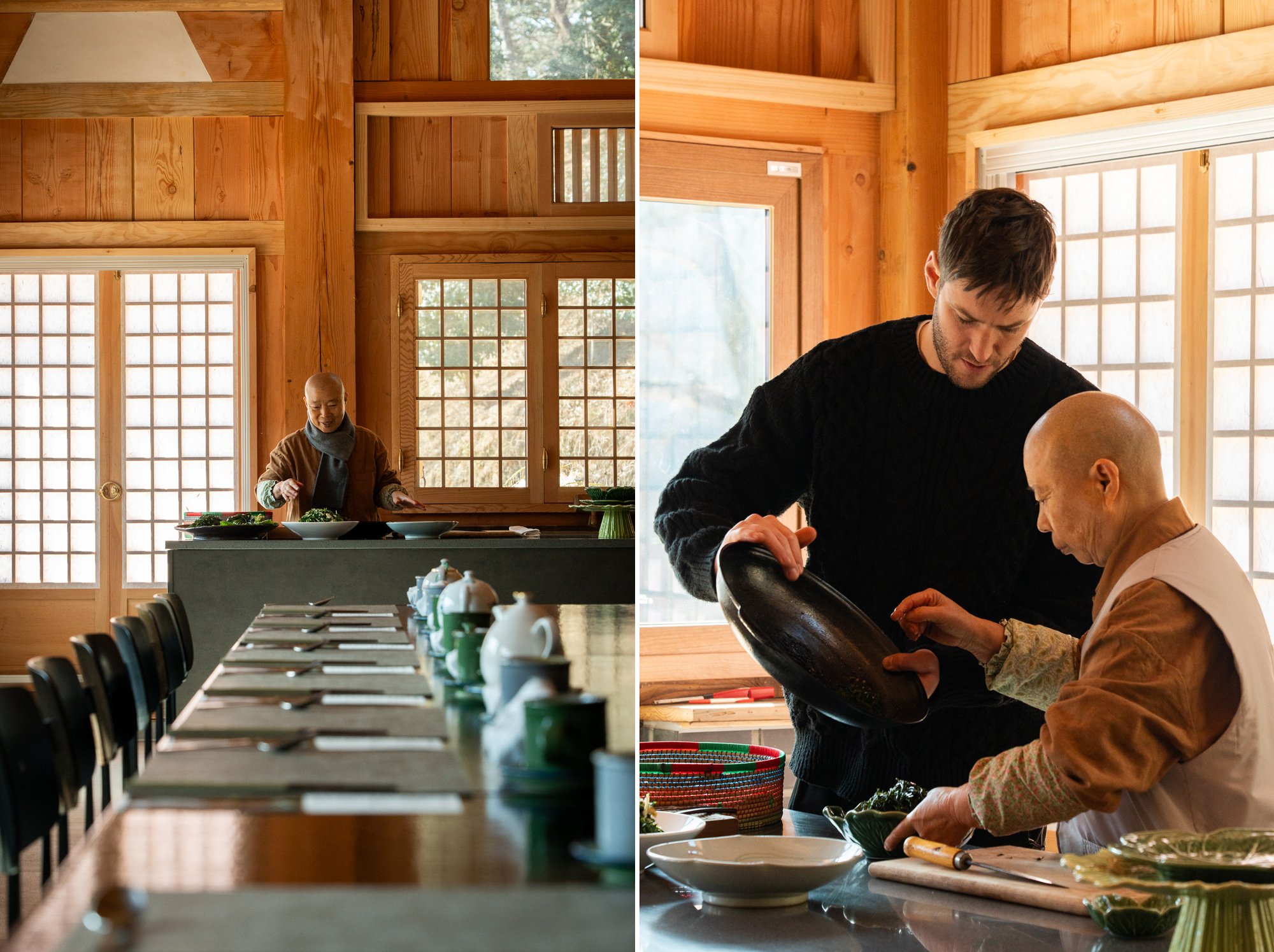
This winter, one of the most meaningful moments was our return to Cheonjinam Hermitage at Baekyangsa Temple, where we had the privilege of meeting Jeong Kwan again.
In the quiet space, we shared a simple monastic meal prepared with her house-made soy sauce, doenjang, and seasonal fruit syrups. The flavours were restrained yet precise; the deeply aged pastes defined each ingredient with clarity, while a gentle sweetness brought balance to the whole.
The practice of balwoo gongyang — taking only what is needed and leaving nothing behind — felt less like dining and more like a reflection on one’s attitude toward life.
We are sincerely grateful for the warm welcome. The visit reminded us that cooking begins not with technique, but with intention.
Yeongam Eoran: An Ingredient Shaped by Time
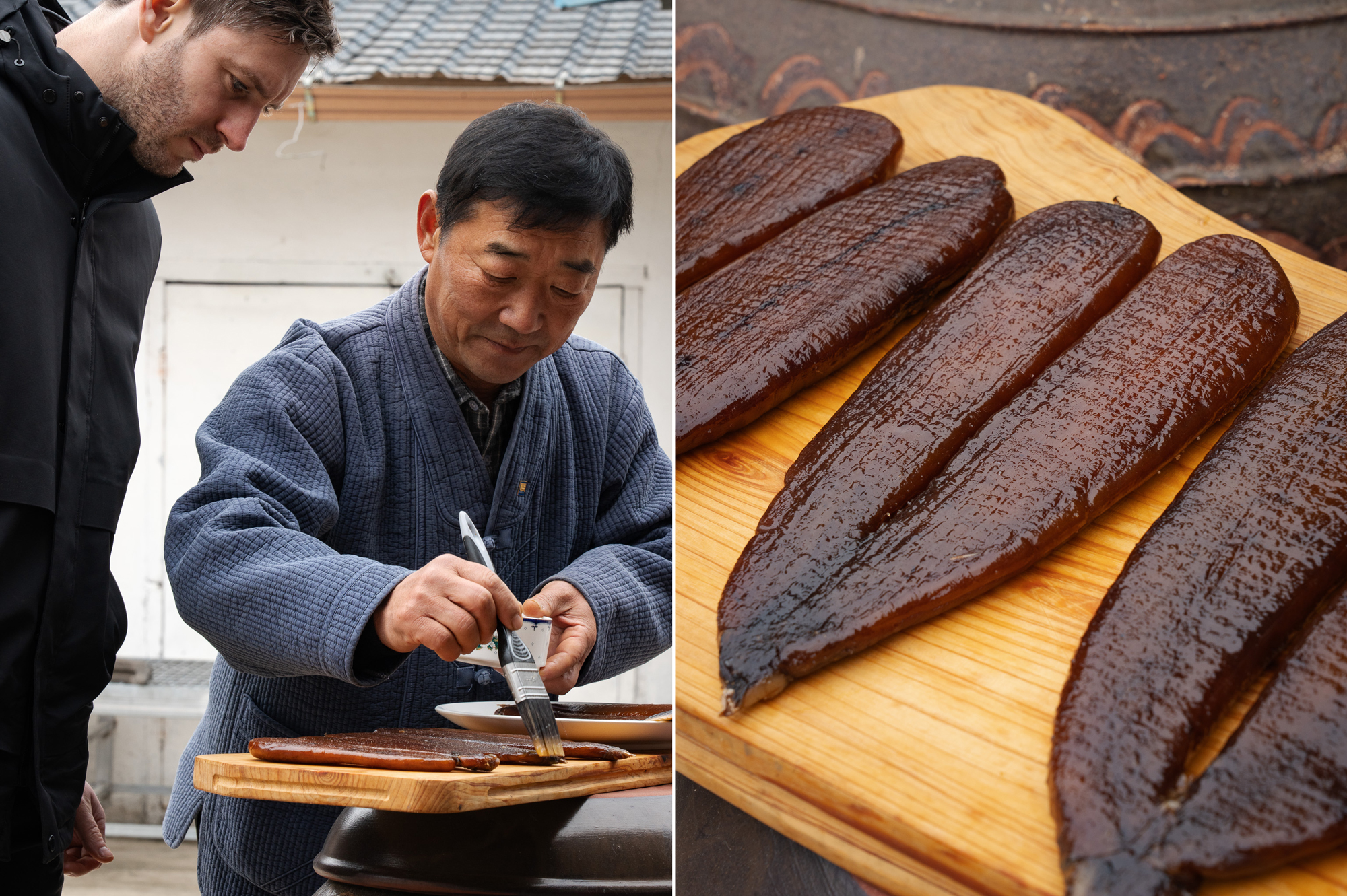
In Yeongam, Jeollanam-do, lives Master Choi Tae-geun, Korea’s only certified master of eoran — a traditional delicacy made by curing and drying mullet roe.
Yeongam eoran has long been regarded as a prized ingredient and was even recorded as a royal tribute during the Joseon Dynasty.
The roe of mullet, caught by hand during the spawning season, is first cured with aged sea salt from which the bittern has been carefully removed. It is then immersed in a 250-year-old family soy sauce.
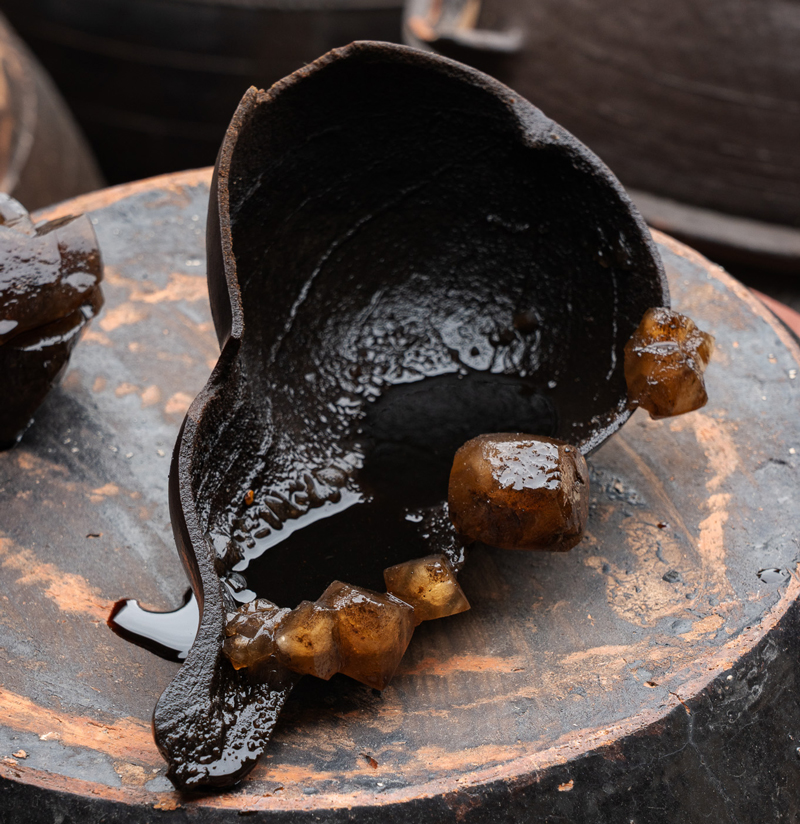
Over generations, salt crystals — known as seokjangyeom — have formed inside the earthenware jars.
These crystals dissolve and solidify in response to changes in temperature and humidity, gradually stabilising the salinity over time.
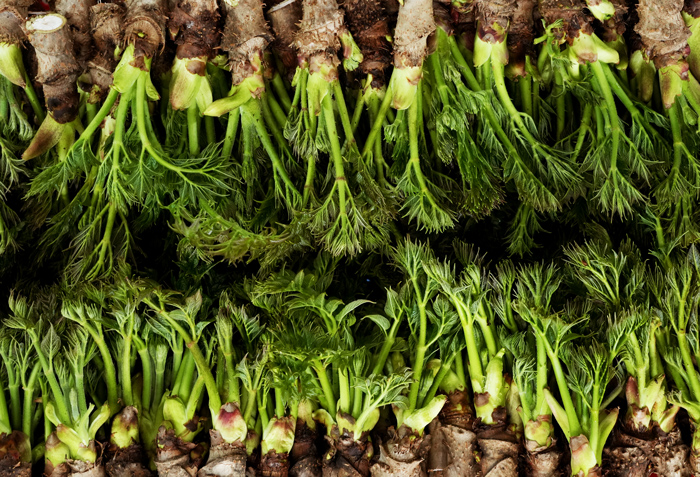
Spring, In Preparation
EVETT has begun preparations for the spring season. As the earth warms, new ingredients begin to emerge. This is a quiet time of design — considering how best to capture the fullness of the season.